The European Investment Bank (EIB) signed a €300 million (R5.7 billion) critical minerals partnership on Thursday 26 November with the Industrial Development Corporation (IDC), South Africa’s largest development finance institution.
BusinessTech reported, in a story carrying Bloomberg’s reporting, that it is the EIB’s first critical minerals funding outside the European Union. The IDC said in a statement that day that the arrangement is expected to mobilise €900 million in total investment.
BusinessTech quoted the IDC as saying the deal addresses one of the barriers to critical minerals development, “access to long-term, competitively priced capital”. It quoted EIB Vice-President Ambroise Fayolle as saying the facility will contribute to “economic growth, value creation and greater supply chain resilience” in Africa and Europe.
What the money is for
The EIB’s own project record, republished by the Early Warning System database, describes a loan to the IDC that the IDC then lends on. The end borrowers are projects in critical raw materials supply chains in which the EU has a clear interest.
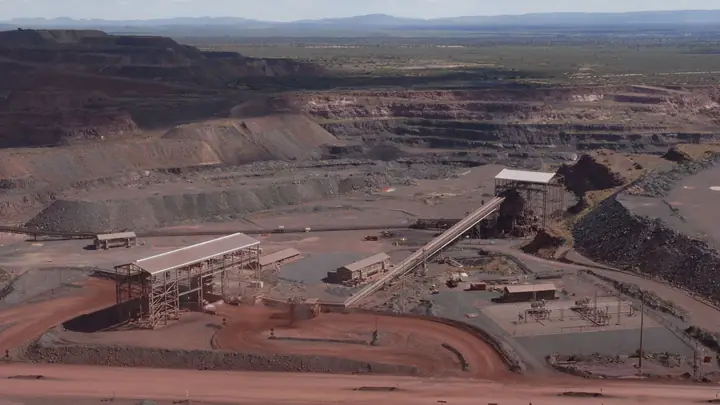
Mining, processing, refining, recycling and substitution all qualify. So does supporting infrastructure, for example power, transport links and digital networks. The record says the EIB board voted on the project on 23 September 2026 and that it is classed as approved. It also says projects will follow the EU Critical Raw Materials Act and will support industrial development and local value addition.
The record lists the loan at €300 million and the total project cost at €900 million, which matches the IDC’s figures. That means the EIB would fund one third of the programme.
Where it fits
The EU and South Africa run a strategic partnership on sustainable minerals and metals value chains. South Africa and the EU co-hosted an investment seminar on the margins of the Mining Indaba in Cape Town on 9 February 2026. It said a Team Europe package of close to €12 billion (about R240 billion, the delegation’s own conversion) has been announced in support of South Africa’s just energy transition. The EIB facility is a separate loan, and the reports do not say whether it counts towards that package.
BusinessTech said South Africa holds some of the world’s largest metal deposits, and that several of the major mining companies are based in the country with operations elsewhere in Africa. The EU, it said, is competing with China, the US and others for supplies of rare earths, copper and cobalt used in batteries, power lines and renewable energy plants.
The reports do not say which projects will be funded first, what the loan costs the IDC, or how long it runs. The IDC’s statement itself could not be opened, so this story rests on the BusinessTech report and the EIB project record.
The EIB project record lists the approval but gives no date for the first loans to projects. Our guide explains how mining royalties are calculated.