Tshwane’s Bronkhorstspruit Water Treatment Works supplied water without chlorine from 24 September to 14 October, and 408 people fell ill, four government bodies said on 19 October.
The joint statement, issued by the Department of Water and Sanitation for the health and water ministries, the Gauteng government and the City of Tshwane, counts 408 gastrointestinal illness cases between 7 and 18 October. Most patients are under four years old, and no deaths have been reported. New cases peaked at 72 on 13 October and fell to 16 on 18 October.
The National Institute for Communicable Diseases found Norovirus, Campylobacter and Shigella in three of four stool specimens. It found no cholera bacteria. The statement said mixed pathogens and rapid spread point to a shared water supply. Water tests by the water department on 14 October found “extremely high levels of E. coli and total coliforms” at the works and in the Ekandustria and Zithobeni reservoirs, according to the statement.
The department’s investigation found that Tshwane had trouble with its chlorine supplier. It also found that the city failed to warn residents that the water was not chlorinated, as the 2025 Compulsory Standards for Water Services require. The department said it has started accountability steps against those responsible. The statement does not set out Tshwane’s own account of the failure, apart from the supplier problem, and it names no official.
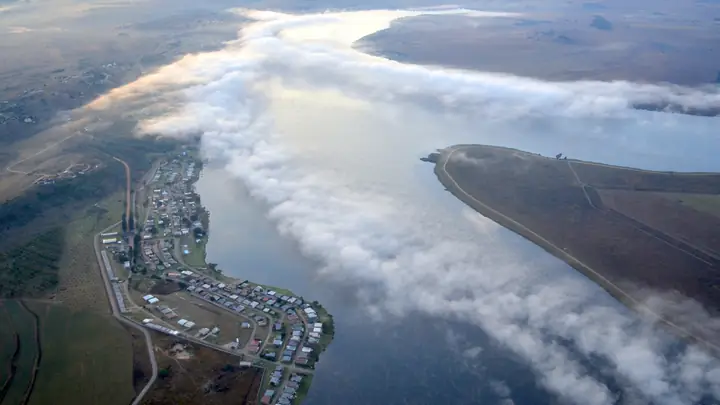
The works draw from the Bronkhorstspruit River, which the department described as badly polluted with sewage from upstream plants run by the Victor Khanye Municipality and from Tshwane’s own pump stations. Pumps, sand filters and other equipment at the works were not working, the investigation found.
Source: Department of Water and Sanitation joint statement, 19 October 2026. Chart: Rand Desk
Tshwane closed the works on 14 October, restored chlorine by 15 October and reopened on 16 October, telling residents the water was still not fit to drink. Tanker water comes from the Cullinan works, which tests show is safe.
The Water Research Commission began independent tests on 18 October, with results expected from Wednesday 21 October. Its report on the causes is due by 28 October. The NICD is collecting more specimens to decide whether to declare a formal outbreak.
Tshwane plans to appoint Rand Water to improve the works, and the statement says it is “not possible to give a timeframe” for when residents can drink the water again. The statement says Tshwane spent R21 million on the works this financial year and has put more than R107 million into a three-year programme. Related coverage: unpaid municipal pension contributions and the environment department’s unspent budget.
The next dates are 21 October, when the Water Research Commission’s first test results are due, and 28 October, when its report on the causes is due.