The Independent Electoral Commission (IEC) said 1,425,942 voters had cast special votes when special voting closed on 3 November, a day before local elections.
According to the Commission’s statement, 974,852 voted at voting stations and 451,090 through home visits between 2 and 3 November. It had approved about 2.6 million special voters, so 55% of them had voted. The Commission said the figures would be finalised that night. Special voting is for approved voters who cannot vote on Election Day, and staff took it to voting stations and to people’s homes. Home visits made up about 32% of the votes recorded.
Gauteng recorded the most special votes, 264,898, followed by KwaZulu-Natal with 208,846 and the Eastern Cape with 207,258. The Northern Cape had the fewest, 63,973. Limpopo recorded 180,627, Mpumalanga 149,714, the Western Cape 148,493, North West 126,187 and the Free State 75,946.
The Commission said the special votes have been securely stored and will be counted with the Election Day ballots after voting stations close. Results will be announced per voting station as part of the overall results. The statement followed the two-day special voting period.
The Commission said it is “encouraged by the enthusiasm of South Africans” who voted on the two days.
Source: Independent Electoral Commission, preliminary figures, 3 November 2026. Chart: Rand Desk
For Election Day it said 29.2 million voters are registered at 23,696 voting stations, with 188,000 Commission officials deployed. Voters must show a valid identity document: a smart ID card, a green barcoded ID book or a Temporary Identity Certificate, and may vote only where they are registered. The Commission also set out the rules for campaigning and behaviour at voting stations, including a ban on photographing a marked ballot paper.
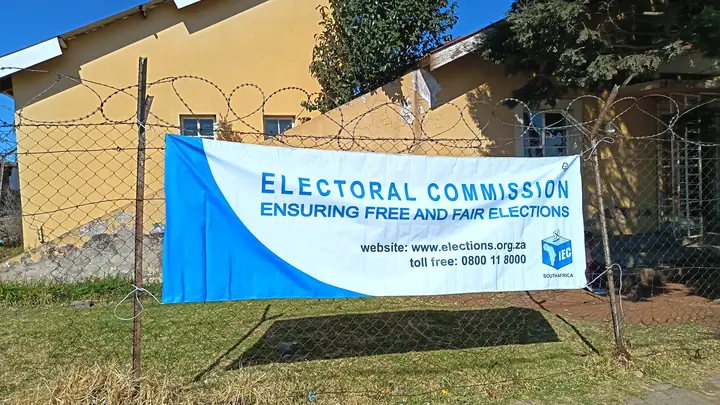
Voters who are unsure where they registered can check before leaving home, the Commission said, by WhatsApp on 0600 88 0000, through its contact centre, by SMS to 32810 (an SMS costs R1) or at www.elections.org.za. Giving officials the sequence number from the voters’ roll helps them find a voter faster. The statement also said party colours are allowed on a voter’s clothing, but party regalia and campaign material are banned inside or near a voting station, as is carrying a dangerous weapon.
The Commission said false or misleading information about the election can undermine public confidence, and asked the public to check electoral information through official channels before sharing it.
The Commission said campaigning had to end at midnight before Election Day. Voting stations are open from 07:00 to 21:00 on 4 November.