President Cyril Ramaphosa said on Tuesday evening he has “no thought of resigning” after the African National Congress’s (ANC) poor showing in this month’s local elections, TimesLIVE reported on Thursday.
He was speaking in conversation with Sygnia founder Magda Wierzycka at the investment firm’s 20th anniversary celebration. Wierzycka asked him about fears among investors that he would step down after the vote. “It was a rumour that has spread around because of the performance of my party,” Ramaphosa said, according to TimesLIVE. “I am not resigning.”
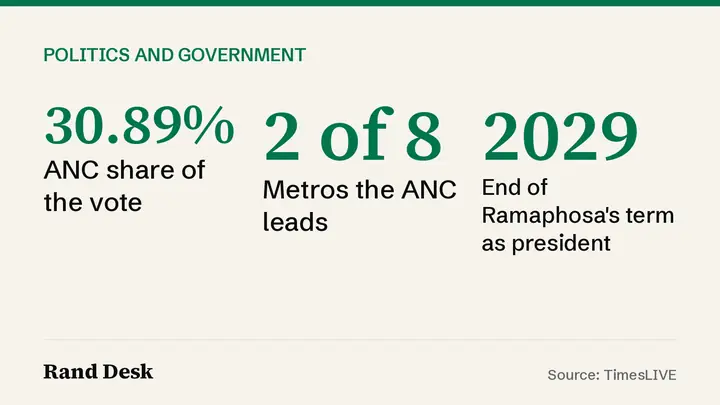
He said his term as ANC president ends at next year’s elective conference and his term as president of the country ends in 2029. TimesLIVE reported that he described the economy as in better shape than in many years, while saying growth is “a little bit anaemic” against the 3% target.
What the election did to the ANC
The Electoral Commission’s declaration on 8 November put the ANC first nationally, with 30.89% of the vote and 3,164 council seats. TimesLIVE reported that the party leads in two of the eight metros. Our metro results page shows how each council split, and seven of the eight are hung.
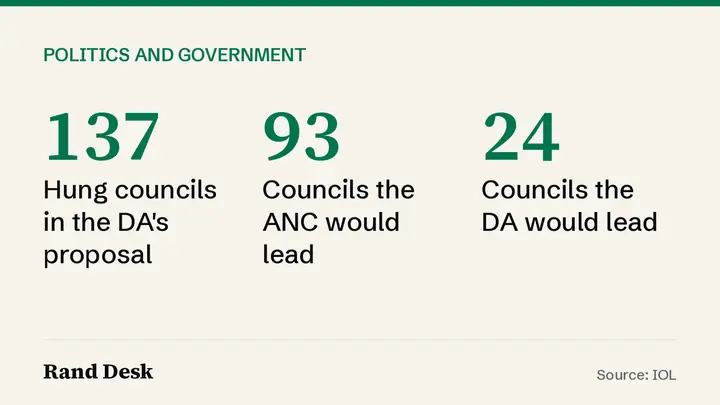
TimesLIVE also reported that the ANC has agreed a deal with ActionSA that, TimesLIVE reported, would leave the Democratic Alliance (DA), which won the most votes in Johannesburg, on the opposition benches there. Investec’s Bishop said, as BusinessTech reported, that sentiment would likely worsen if the ANC forms most local governments without the DA.
Two accounts of a resignation offer
The report carried a second view. Former president Thabo Mbeki said on Mbuyiseni Ndlozi’s African Renaissance Podcast that he had heard Ramaphosa offered to resign after the results, which Mbeki called the “correct” position. ANC secretary-general Fikile Mbalula and other senior ANC figures deny that Ramaphosa offered to resign, TimesLIVE reported. Neither claim is confirmed in a primary record.
Why the rand has been watching
Investec’s chief economist Annabel Bishop told BusinessTech on 24 November that the rand was trading around R17.50 to the dollar, having lost close to 7% in a couple of weeks. She said the dollar and US interest rate expectations are the main drivers, and that coalition talks add political risk: if the ANC forms most local governments without the DA, she said, negative sentiment towards South Africa would likely intensify.
The DA holds 87 seats in the National Assembly, according to the same report, and is the second-largest party in the Government of National Unity. Our rand report tracks the daily rates.
What happens next
TimesLIVE reported that deputy president Paul Mashatile is widely considered a frontrunner to succeed Ramaphosa as party leader at next year’s conference. Before that, S&P and Moody’s review South Africa’s credit rating at the end of this week, Bishop said, with an S&P upgrade expected.