The Treasury and the Presidency said on Friday 30 October 2026 that their reform programme made progress in the second quarter, citing a R4.6 billion Transnet profit.
That profit is for the year to 31 March 2026. Transnet announced it in September, against a net loss of R1.9 billion the year before. The report ties the swing to freight logistics reform, which it says supports operational gains and the return to profit. SAnews, the government’s news agency, summarised the report on Friday; we could not open the report itself.
Operation Vulindlela is a joint Treasury and Presidency programme to speed up structural reforms. The report says the main gains came in restructuring state-owned enterprises, and Cabinet-level decisions on splitting Eskom and Transnet into separate units.
Power, rail and water
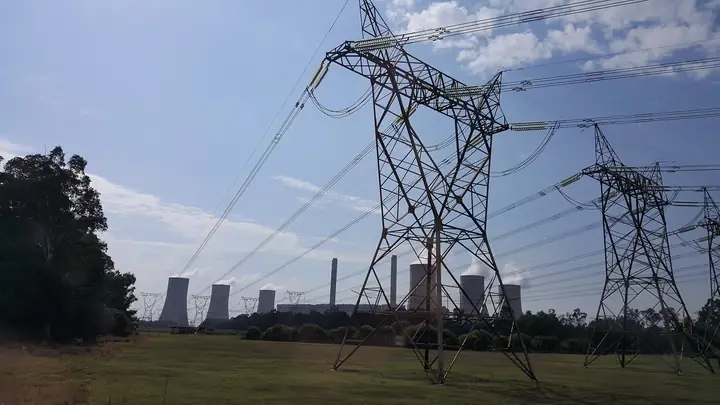
On electricity, the report says the past quarter produced a market transformation position paper, a revised pricing policy and the regulator’s trading platform framework. The Eskom Restructuring Task Team continues to work on unbundling the National Transmission Company and setting up an independent transmission system operator. A detailed implementation plan for that operator is still in development.
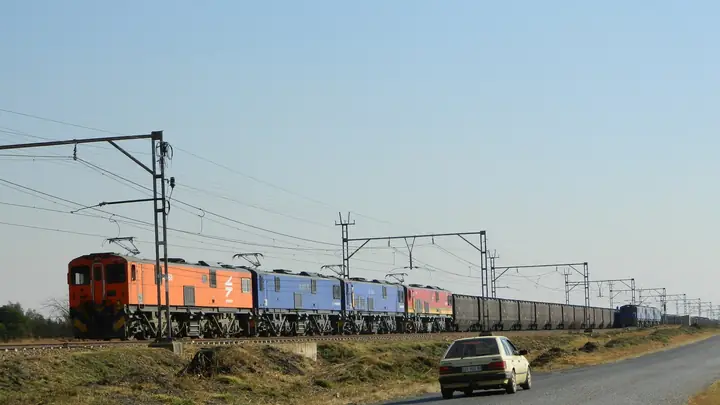
On freight rail, Cabinet backed setting up a National Ports Authority independent of Transnet. A revised Network Statement is out, a step towards open access to the rail network. The government is also seeking a strategic partner for the Ngqura manganese export corridor. A National Rail Bill goes to the public for comment only after Cabinet approves it.
Net loss, year to March 2025Net profit, year to March 2026
Source: SAnews, citing the Operation Vulindlela Q2 2026 report and Transnet's September announcement. Chart: Rand Desk
On water, the report says the board of the new national water resources infrastructure agency is appointed. It lists the Water Services Amendment Bill, an independent economic water regulator and a revised water pricing strategy as moving forward.
Cities, housing and digital services
Metros now run the trading services programme in full. Each participating metro’s incentive money, paid in 2027/28, will depend on how well it separates the finances of its trading services. Cabinet has signed off a revised local government White Paper, and the President has signed into law the act governing the Public Service Commission. A bill amending municipal finance management is open for comment.
On housing, a framework for affordable rental in inner cities is still being refined, with a pilot expected in the next financial year. Digital tools to check and track the title deeds backlog are being built and trialled.
The MyMzansi platform, meant to let people use government services from one site, has moved from development to a working prototype in a controlled test environment. The MzansiXchange data-sharing pilot is due to finish in December. The Electronic Travel Authorisation system launched in August, and the report says it has improved tourist visa processing.
The report says progress is “uneven in some areas” and that the focus is “increasingly shifting towards delivery and measurable outcomes”.
For related reading, see our stories on Eskom’s procurement reviews, the Reserve Bank’s payments exemption notice and the Transnet iron ore line shutdown.
The next dated step in the report is December, when the MzansiXchange pilot is due to end.