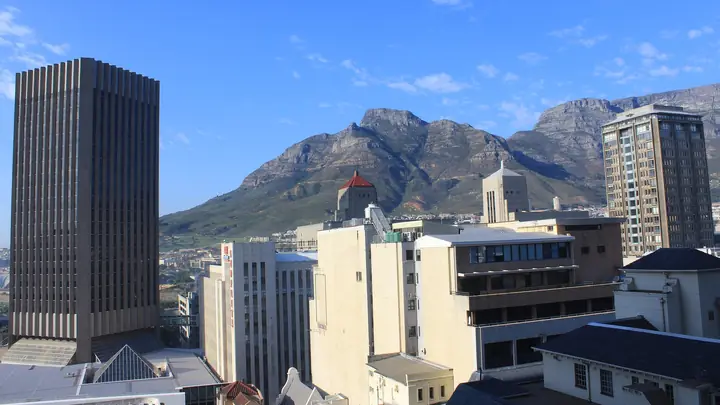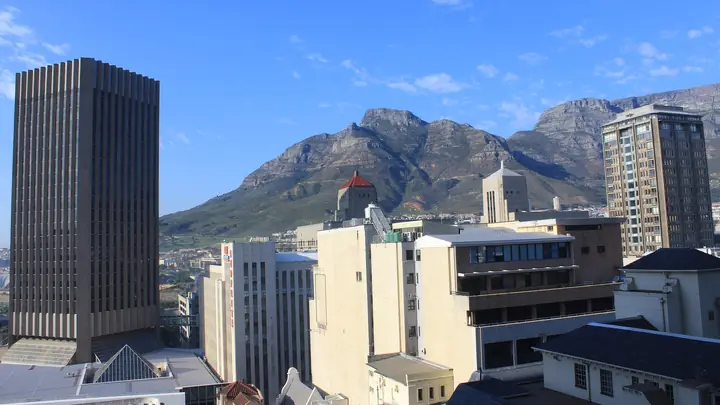
Water and Sanitation Minister Pemmy Majodina announced on Monday that Western Cape households and industry get 7% less water under their allocations, and irrigators 15% less.
The cuts follow the department’s annual operating analysis of the Western Cape Water Supply System for the 2026/27 water year. The department said they will save about 56.8 million cubic metres a year: 27.2 million from domestic and industrial users and 29.6 million from irrigation.
The system has six linked dams with a combined capacity of about 898.2 million cubic metres. Cape Town draws on it, as do West Coast communities, other towns and farms. On 2 November 2026 storage stood at 72.5%, or 646.5 million cubic metres. In the same period last year it was 84.4%, or 694 million cubic metres, the department said.
The department said that is below its preferred operating level of 80% and 11.9 percentage points under the 10-year average of 84.49%.
Majodina said the fall was due mainly to below-normal rainfall in the 2026 winter season. According to the department, rainfall in the 2024/25 and 2025/26 rainfall periods was 722.7mm and 752.8mm, against a long-term average of 964mm. That is about 75% and 78% of the average.
Source: Department of Water and Sanitation, as published by SAnews, 16 November 2026. Chart: Rand Desk
“The annual analysis indicates that the system remains operationally stable and capable of supplying current water requirements,” Majodina said. She added that it also points to risks that need action now.
Climate forecasts point to a strong to extreme El Niño, which it said could bring higher temperatures, more evaporation and less runoff into dams. Modelling by water resource specialists shows that if users keep drawing full allocations without intervention, the risk of shortages and mandatory restrictions rises from 2027.
The department said current dam levels are still higher than in the severe 2016/17 drought. Majodina thanked users for not drawing their full allocations and asked them to hold consumption at current levels.
She also called on municipalities, businesses, farmers and households to step up conservation, and said saving water can no longer be a stopgap for dry spells. Residents are asked to follow municipal restrictions and report wastage and breaches of by-laws, and municipalities are asked to enforce them.
Our earlier pieces on what a new council means for rates and tariffs and on how municipal valuation rolls and objections work cover how municipal bills are built. SAnews’s account of the briefing carries no tariff change.
The department will keep monitoring dam storage, climate and demand through the 2026/27 water year, and said it may introduce further measures if conditions deteriorate.