Kumba Iron Ore said on 20 October that its third-quarter production fell 19% to 7.5 million tonnes, while sales rose 3% to 10.0 million tonnes.
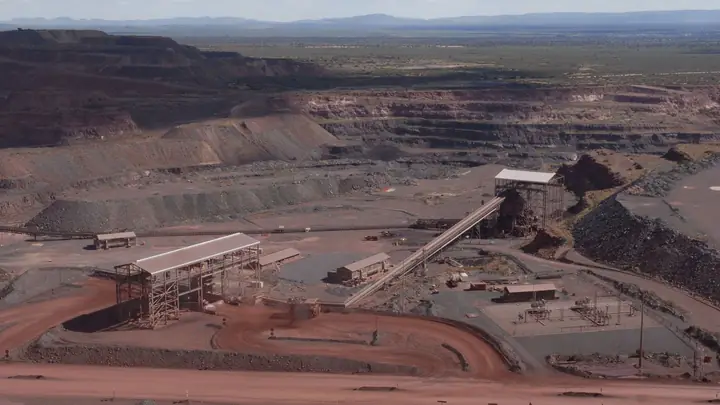
The fall came from Sishen, where the dense-media-separation plant was shut so that the new ultra-high-dense-media-separation (UHDMS) plant could be tied in. Sishen made 4.9 million tonnes, down 22% from 6.3 million. Kolomela made 2.6 million tonnes, down 12% from 2.9 million, which Kumba put down to a shortage of feed for its plant after the heavy rain and flooding of the second quarter.
Sales ran about 2.5 million tonnes above production. Kumba drew finished stock down to 4.8 million tonnes from 7.0 million at the end of June. Of that, 2.9 million tonnes sat on the mines and 1.9 million at Saldanha Bay port. Lump ore sales rose 10% to 7.0 million tonnes, while fines fell 9% to 3.0 million.
Chief executive Mpumi Zikalala said production and sales “remain on track to achieve the full year guidance”. That guidance is unchanged at 31 to 33 million tonnes of production and 35 to 37 million tonnes of sales. Kumba expects sales at the upper end of its range.
Rail volumes were lower. Ore railed to the port fell 8% to 9.4 million tonnes, and Kumba said a derailment cut 0.4 million tonnes from that. During the 10-day logistics maintenance shutdown in October, 22km of rail line was replaced. That brings the replacement programme to 33% of 517km and has lifted 40% of the speed restrictions along the ore export channel, Kumba said. The shutdown was covered in our earlier report on the Sishen to Saldanha line.
Source: Kumba Iron Ore production and sales report, third quarter 2026. Chart: Rand Desk
On price, Kumba said it realised an average of US$86 a wet tonne so far in 2026, down from US$94 a year earlier. That is 9% above the benchmark average of US$79. It described the market as softer: blast furnace profitability at 247 Chinese mills surveyed by Mysteel fell as low as 7% by the end of September, from 58% a year earlier. The Saldanha to Qingdao freight rate reached US$32 a tonne in September, a five-year high.
Cost guidance is unchanged, with Sishen’s unit cost expected towards the upper end of R530 to R560 a tonne and Kolomela’s at the lower end of R430 to R460. Waste mining guidance was cut to 175 to 190 million tonnes from 180 to 195 million, and Kolomela’s to 40 to 45 million from 45 to 50 million.
The R11.2 billion UHDMS project is about 60% complete. Kumba said the main tie-in is on track to finish before the end of 2026.