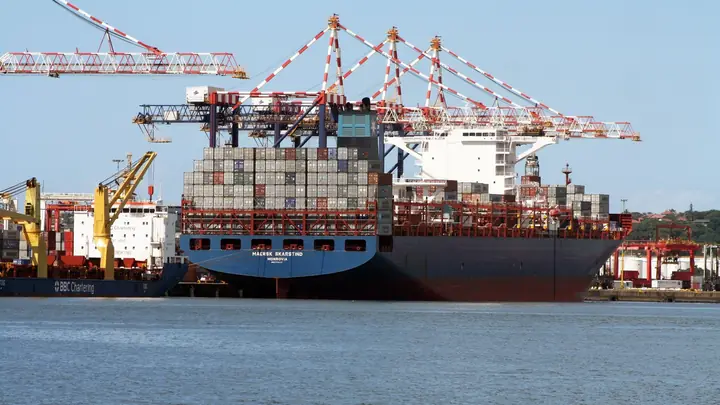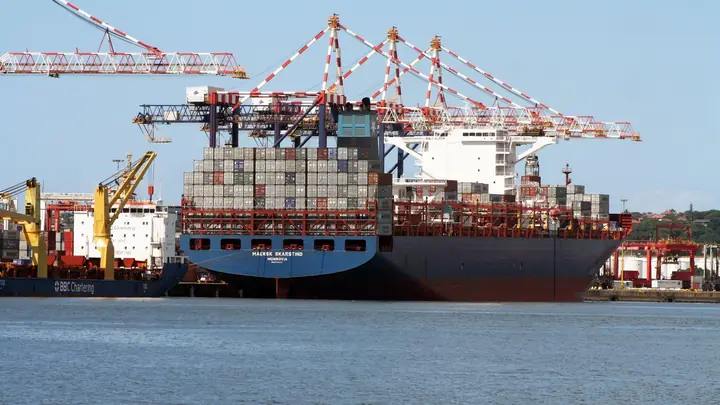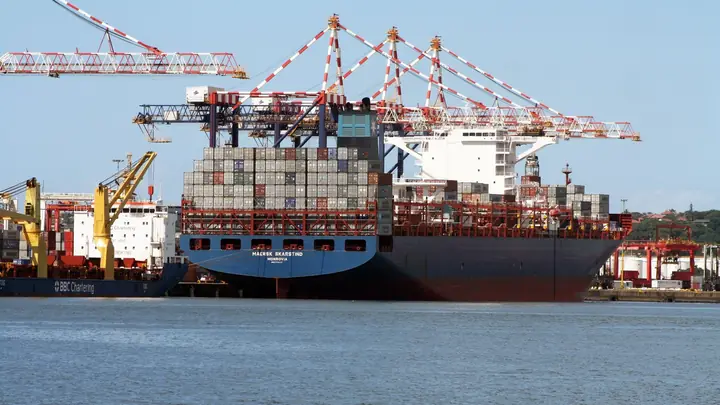
Transnet said on 21 November that Durban’s Pier 2 was improving before the Durban Gateway Terminal partnership began. It rejected claims that the terminal was handed over broken.
Transnet said recent commentary had described the terminal as broken or run down when International Container Terminal Services Inc. (ICTSI) assumed management on 1 January 2026. It said Pier 2 still faced old infrastructure and equipment-reliability problems, but called the “failed” label inconsistent with the evidence. The statement names no one.
For 2025, when Transnet’s own port terminals division still ran the pier, Transnet said average ship turnaround fell from 105 hours in April to 97 hours in December. The April to December average was 99 hours. It also said the terminal met its agreed operating windows for 63% of scheduled vessels.
Transnet said Pier 2 coped with the 2025 citrus export peak, reporting 28.8% growth on the previous year for that season. It also pointed to a World Bank and S&P Global ranking of container ports for 2025, which it said rated Durban the most improved, up 479 points. In Transnet’s account of that ranking, waiting vessels fell from a peak of 20 to zero and berth utilisation rose from 52% to 76%.
The statement leans on spending. Ahead of the handover, Transnet said, it bought four quayside cranes worth R967 million and put 20 new straddle carriers into service. The package also covered yard haulers, trailers and two reach stackers. It put equipment investment over the preceding 18 months at R1.5 billion.
Source: Transnet statement on performance of Durban Container Terminal Pier 2, 21 November 2026. Chart: Rand Desk
Over January to June 2026, under the new partnership, the terminal handled 915,914 TEUs (twenty-foot equivalent units, the standard container count), which Transnet said was 14.6% more than in the same period of 2025. Pier 2 handles about 60% of South Africa’s container volumes, it said.
The current queue looks different. IOL reported on 21 November that vessels at the terminal wait 14 to 20 days, and that throughput initially fell by roughly 26% to 30% after a mid-August move to the Navis N4 operating system. IOL also reported that throughput on the quayside has recovered somewhat from its low, and that average anchorage waits were about 8.3 days in early October. The freight forwarders’ association, SAAFF, said the backlog adds about 20 days to affected supply chains, IOL reported. Transnet’s statement does not mention the system change or current waiting times.
Javier Lancha, chief executive of Durban Gateway Terminal, said a recovery programme had eased some of the congestion, according to IOL. This statement from Transnet carries no comment from ICTSI or the terminal.
Importers face demurrage and storage charges, exporters can miss sailing deadlines, and some manufacturers have switched to air freight or halted production lines, IOL reported. Our earlier story covers the emergency measures Transnet announced on 18 November, including Berth 102 and diversions to Ngqura. According to IOL, Creecy has given ICTSI three months to improve performance, and more handling equipment arrives in December, with gradual improvement expected up to February 2027.