Fake online shops built with artificial intelligence are targeting Black Friday shoppers, and banks may not refund you if you approved the payment yourself, The Citizen reported on 20 November.
Martin Potgieter, regional chief technology officer at the cybersecurity firm Integrity360, told The Citizen that the spelling mistakes and clumsy layouts that used to give fake shops away have mostly gone. Criminals now use AI to write product descriptions, produce photographs and invent customer reviews, and buy social media adverts to send shoppers to the copies. Studies cited for Integrity360’s 2026 holiday report showed AI-generated content on 75% of the fraudulent stores analysed, Potgieter said.
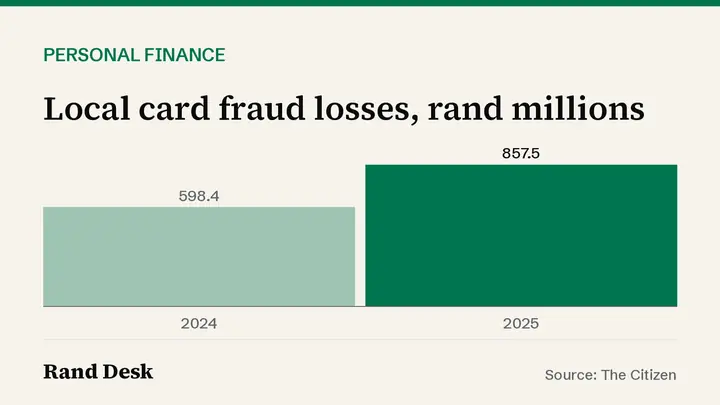
The South African Banking Risk Information Centre (Sabric) recorded local card fraud losses of R857.5 million in 2025, up 43.3% on the year before, according to The Citizen’s report. Including international transactions, card fraud losses reached R1.75 billion.
How the approval trap works
Potgieter described a scheme that turns the bank’s own security against the customer. A shopper types card details into a fake site, which triggers a real transaction elsewhere. The bank sends a one-time PIN or app prompt, the shopper approves it believing it belongs to the purchase, and every check passes. Fraud detection struggles, he said, because a customer approving a payment looks normal.
That is where the refund problem starts. Tshipi Alexander, interim managing executive for unsecured lending at Absa, told The Citizen that a bank will not start a chargeback when the cardholder authenticated the transaction. Where criminals used card details without the customer’s authentication, the bank can start a chargeback.
Source: SABRIC figure for 2025 as reported by The Citizen; 2024 worked back from the 43.3% rise. Chart: Rand Desk
What you can still do
The Citizen’s report lists other routes. A customer who paid for goods that never arrived can lodge a separate dispute under Visa and Mastercard rules. A customer who cannot settle a complaint with the bank can go to the National Financial Ombud, which resolves disputes free of charge.
Potgieter also questioned whether platforms should escape financial responsibility when fraudulent adverts run on their services, and wants advertisers vetted more strictly, with the cost of losses shared. He pointed to Australia, where rules starting in March 2027 will oblige banks, telecoms firms and digital platforms to act against scams, with fines for each breach that can reach A$50 million. The report said South Africa has no comparable rules yet.
Woolworths has already warned customers about a fake R200 meat box promotion, the report said. For checks before you pay, Potgieter’s advice was to go straight to the retailer’s own website, study the address, doubt prices that look too low and refuse odd payment requests. A padlock or https in the address does not prove a shop is genuine.
For your rights once a genuine purchase goes wrong, see our guide to returns and refunds on Black Friday deals and the check on whether a was-now price is a real discount. Black Friday itself falls on 27 November.