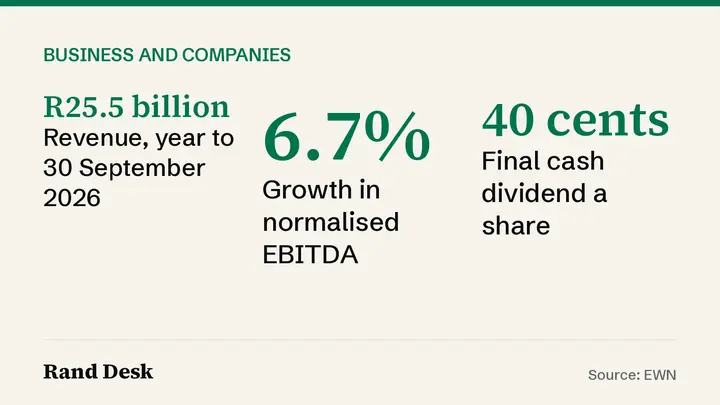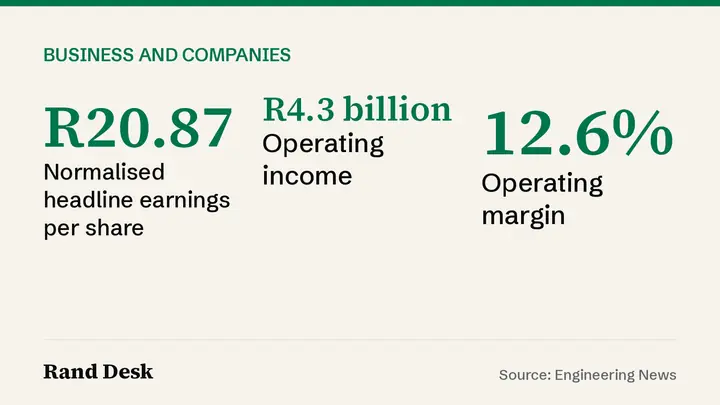
Tiger Brands raised its final dividend 5.7% to R12.99 a share as normalised headline earnings per share grew 10.5% to R20.87 in the year to 30 September, Engineering News reported.
The food maker’s operating income rose 12.6% to R4.3 billion, according to the report. Its operating margin widened to 12.6% from 11.1% a year earlier and now sits above the 12% target. Normalised volumes grew 4.5%, ahead of the 1% to 3% range the company aims for.
The dividend
The final dividend of R12.99 compares with R12.29 a year earlier, a rise of 70c. With the interim dividend of R4.30, the total for the year is R17.29 a share.
A shareholder with 1,000 shares receives R12,990 for the final payout and R17,290 for the year, before dividends tax. That holding is an example, not an average.
What held the year back
Earnings per share from total operations fell 5.8% to R23.37, Engineering News reported. Income from associates dropped 63% to R139 million after Tiger Brands disposed of its Carozzi business in its 2025 financial year. Net financing costs were R145 million, against net finance income of R65 million a year earlier, which the company ties to balance sheet changes and more borrowing.
Source: Engineering News, 26 November 2026, reporting Tiger Brands' results for the year to 30 September 2026. Chart: Rand Desk
Chief executive Tjaart Kruger said, as Engineering News reported, that protests in the second half of the year hit the general trade channel, where customers cut stock sharply for fear of looting. Higher fuel prices added to inflation and weighed on spending.
Portfolio and outlook
Kruger said the portfolio clean-up that started in the 2024 financial year is nearly done. Only the sale of the Chococam business is outstanding.
He expects the 2027 financial year to stay hard, with pressure on household income, supply chain disruption linked to geopolitical tension and climate-related events. Tiger Brands plans to accelerate investment in manufacturing capacity in South Africa.
What this means for South Africa
Kruger was quoted by Engineering News as saying that “households continue to face mounting pressure on disposable income” and that affordability sits “at the heart of everything we do”. The volume growth of 4.5% suggests demand for its products held up in a year of protests and dearer fuel.
For shareholders, the payout is the clearest gain: R17.29 a share for the year. For households, the cost of fuel matters twice, at the pump and in transport costs for food makers. Our explainer on where the money in a litre of petrol goes shows how much of a litre is set by the international price and the rand.