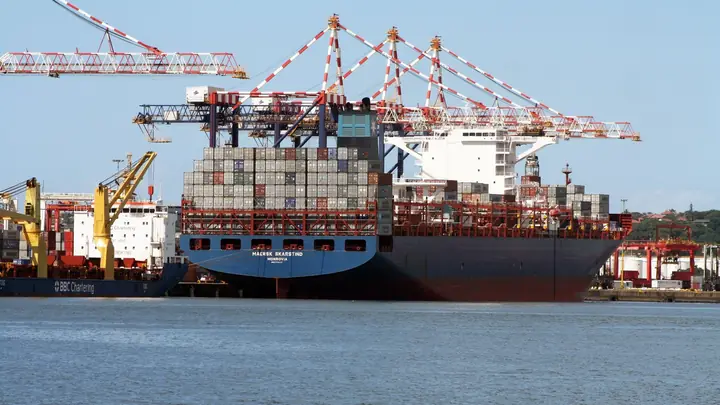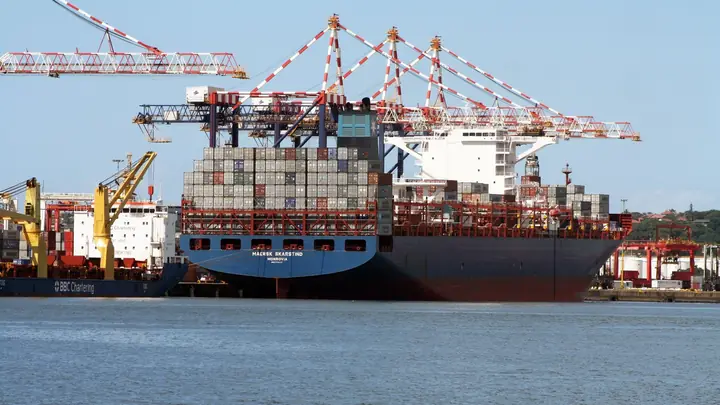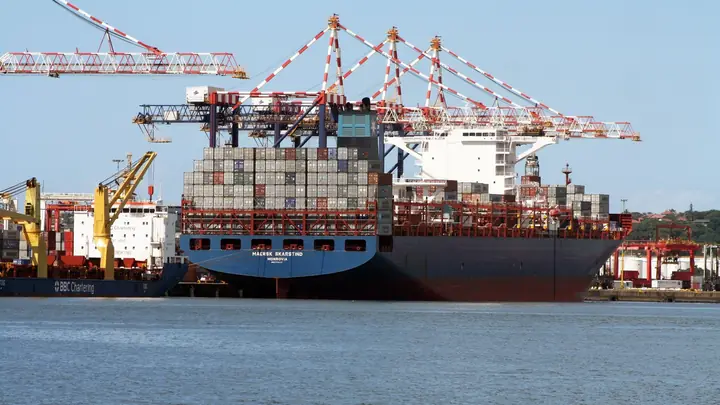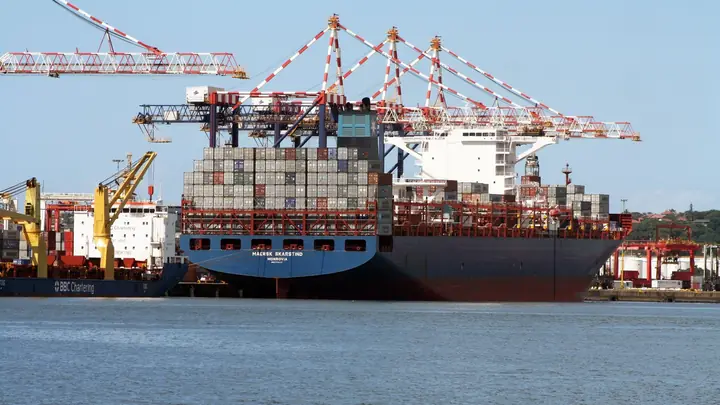
Delays of up to six weeks at the Port of Durban are costing manufacturers production time, IOL reported on Saturday, with container charges from about US$1,000 a day.
IOL’s report cites Andre Smith, chief executive of cable maker Cables 4 Africa, as reported by The National. He said container discharge at Durban had stretched from about three days to between seven and 14, and that delays of 20 days or more could pass from the time a vessel docked. He blamed part of the slowdown on how bookings are handled in the terminal’s Navis system.
The charges are the part that lands on a company’s books. Smith said, according to IOL, that they depend on the shipping line and are billed in US dollars, and can start at an average of US$1,000 a container a day. IOL put that at about R17,500. IOL carried no response from the shipping lines or Transnet. At the Reserve Bank’s rate of R17.3544 to the dollar on 27 November 2026, US$1,000 is R17,354.
Discharge times of 7 to 14 days, against about three, add four to 11 days. If a shipping line charged US$1,000 for each of those extra days, one container would cost between R69,416 and R190,894 (four and eleven days at R17,354). Our arithmetic assumes every extra day is charged; IOL did not say how many days are free under each contract.
Smith gave one example. Stock due at Durban at the end of September was reported as arriving in mid-October, after the ship split its discharge and went back to anchorage. Smith said it docked six weeks late, a figure IOL’s dates do not fully match.
Deneys head of transport Malcolm Hartwell, a master mariner, said, according to IOL, that none of this would surprise businesses that rely on Durban’s container terminals. He said the delays affect cash flow for traders and for their customers, and that firms are likely to ask Transnet and the government for help as congestion continues.
The terminal operator is adding equipment. Durban Gateway Terminal, run by ICTSI and Transnet, said it will receive 12 Konecranes hybrid straddle carriers that can stack containers four high. The first are due before the end of June 2027. Chief executive Javier Lancha said the machines should make container handling more reliable and use less fuel, according to IOL.
Dr Simphiwe Madikizela, a senior lecturer at the University of South Africa’s Graduate School of Business Leadership, said, according to IOL, that port problems now reach manufacturers’ output, because late parts disrupt production schedules and make inventory costlier to hold.
The backlog has a longer history. Transnet’s group chief operating officer said earlier this week that the Durban Gateway Terminal queue would not clear in December, as we reported in Transnet says Durban port backlog will last into January. Retailer Pepkor has also warned of late stock, in Pepkor warns port delays will weigh on festive trading.
Smith also raised cable theft and cheap imports as pressures on local producers. IOL carried those as his claims and gave no response from anyone else, so we leave them out here.
The next marker is January, when Transnet expects the Durban queue to start easing.